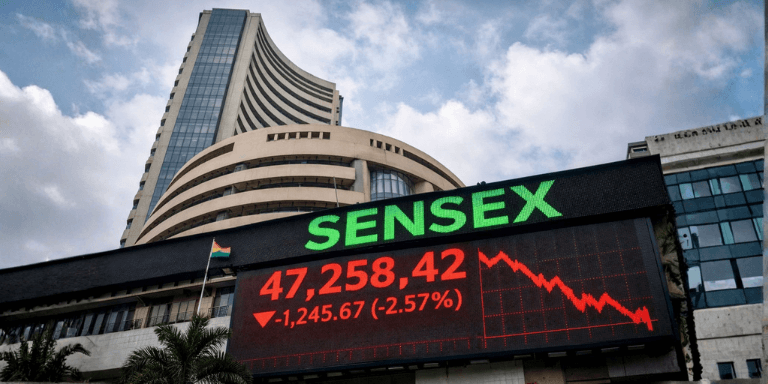
Big Fall in Sensex Today – What Investors Should Do Now
Quick Answer
A big fall in the Sensex usually indicates market volatility, not a permanent loss. Investors in India should avoid panic selling, review their financial goals, and continue SIPs if fundamentals remain strong. Loan borrowers should monitor interest rates and use tools like an EMI calculator in India to plan repayments smartly.
Introduction
A sudden crash in the Sensex often creates panic among investors, especially those managing loans, EMIs, and monthly budgets. If you’re searching for answers after today’s market fall, you’re not alone.
For Indian investors, a stock market dip doesn’t just affect investments it can also influence interest rates in India, loan EMIs, and overall financial planning.
So, what should you actually do now? Let’s break it down in simple terms.
Why Did the Sensex Fall Today?
There are several common reasons behind a sharp fall:
1. Global Market Pressure
- US market decline
- Rising inflation globally
- Geopolitical tensions
2. RBI Policy & Interest Rates
- Changes in repo rate by RBI
- Inflation control measures
3. Profit Booking
- Investors selling stocks after gains
4. Sector-Specific Issues
- Banking, IT, or auto sector decline
These factors directly impact loan EMI India scenarios because interest rates may fluctuate.
What Should Investors Do Now?
1. Don’t Panic Sell
Market corrections are normal. Selling in fear can lock your losses.
2. Review Your Financial Goals
Ask yourself:
- Is your investment long-term?
- Do you need money urgently?
If not, stay invested.
3. Continue SIP Investments
Systematic Investment Plans (SIPs) help average out costs during market dips.
4. Rebalance Your Portfolio
- Shift to safer assets if needed
- Maintain diversification
5. Monitor Loan Interest Rates
A falling market can influence banking decisions.
Use our EMI Calculator at emicalculator.vip to adjust your loan planning instantly.
How Does Sensex Fall Affect EMI & Loans in India?
Direct Impact:
- Banks may revise lending rates
- RBI may change repo rate
- Loan EMIs can increase or decrease
Indirect Impact:
- Job market uncertainty
- Reduced income flow
- Tightened lending policies
Example: EMI Impact During Market Volatility
Let’s understand with a simple example:
| Loan Type | Loan Amount | Interest Rate | EMI Before | EMI After Rate Change |
|---|---|---|---|---|
| Home Loan | ₹50,00,000 | 8.5% | ₹43,391 | ₹45,112 |
| Personal Loan | ₹5,00,000 | 12% | ₹11,122 | ₹11,689 |
| Car Loan | ₹10,00,000 | 9% | ₹20,758 | ₹21,600 |
Even a small rate change affects your monthly budget.
Always check updated EMIs using
Use our EMI Calculator at emicalculator.vip
Step-by-Step: What You Should Do Today
Step 1: Check Your Investments
- Review portfolio losses
- Avoid emotional decisions
Step 2: Evaluate Your Loans
- Check current interest rates
- Look for refinancing options
Step 3: Plan Your EMIs
- Use EMI Calculator India tools
- Adjust tenure or prepayment
Step 4: Build Emergency Fund
- Keep 6 months’ expenses ready
Step 5: Stay Updated
- Follow RBI updates
- Track market trends
Expert Tips for Indian Investors
- Invest for long-term (5–10 years)
- Avoid lump-sum investing during volatility
- Focus on fundamentally strong stocks
- Keep debt-to-income ratio under control
- Always calculate EMI before taking loans
Why EMI Planning is Crucial During Market Falls
When markets fall:
- Income uncertainty increases
- Interest rates may rise
- Financial stress grows
Smart planning reduces risk.
Use:
- EMI Calculator India
- Loan comparison tools
- Budget tracking
Pro tip: Before taking any loan, calculate multiple scenarios using
Use our EMI Calculator at emicalculator.vip
EEAT (Trust Section)
This article is based on:
- RBI monetary policy trends
- Indian banking system practices
- Real EMI calculation scenarios
We focus on accurate, practical, and user-first financial guidance for Indian users.
FAQs (AEO Optimized)
1. What happens when Sensex falls?
A Sensex fall indicates a decline in stock prices, affecting investor wealth and market sentiment. It may also impact interest rates and loans in India.
2. Should I invest when the market is down?
Yes, if you are a long-term investor. Market dips provide good buying opportunities through SIPs.
3. Does Sensex fall affect loan EMIs?
Indirectly, yes. RBI policies influenced by market conditions can change interest rates, affecting EMIs.
4. What should loan borrowers do during market crashes?
Review interest rates, avoid new high-interest loans, and use EMI calculators to plan better.
5. Is it safe to continue SIP during market fall?
Yes. SIP helps average costs and reduces risk over time.
6. How can I reduce my EMI burden?
- Increase loan tenure
- Prepay partially
- Refinance loan
- Use EMI Calculator India for planning
7. Will RBI reduce interest rates after market fall?
Not always. RBI decisions depend on inflation and economic conditions.
8. How to calculate EMI quickly?
Use online tools for accuracy.
Use our EMI Calculator at emicalculator.vip
Conclusion
A big fall in the Sensex may look scary, but it’s often a temporary phase. Smart investors don’t panic—they plan.
Stay invested
Track interest rates
Manage your loans wisely
Most importantly, keep your finances under control by planning your EMIs effectively.
Take control of your finances today. Use our EMI Calculator at emicalculator.vip and make smarter loan decisions.
Subscribe to our newsletter
Get the latest financial tips and calculator updates delivered straight to your inbox.