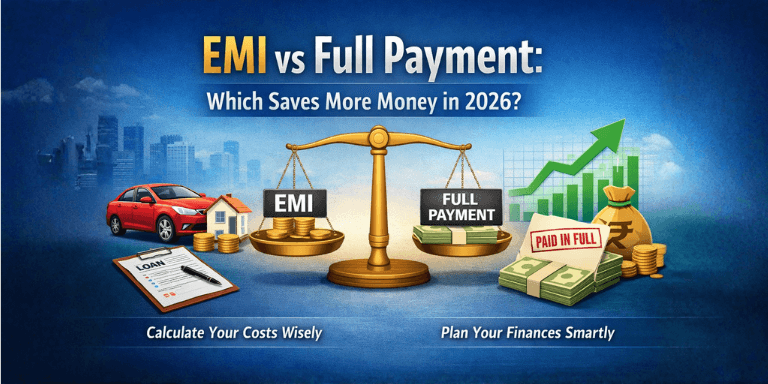
EMI vs Full Payment: Which Option Saves More Money in 2026?
- Understanding EMI: How It Actually Works
- What Full Payment Means in Large Purchases
- EMI vs Full Payment: A Simple Cost Comparison
- Scenario: Buying a Car in 2026
- Key Insight
- When EMI Is Actually a Smart Choice
- 1. Preserving Your Savings
- 2. Investing Your Money Elsewhere
- 3. Managing Cash Flow
- 4. No-Cost EMI Offers
- When Full Payment Saves More Money
- 1. Avoiding Interest Charges
- 2. Lower Financial Obligations
- 3. Better Negotiation Power
- How to Decide Between EMI and Full Payment
- Step 1: Check Your Cash Reserves
- Step 2: Compare Interest Cost
- Step 3: Evaluate Opportunity Cost
- Step 4: Analyze Loan Tenure
- Why an EMI Calculator Is Essential Before Taking a Loan
- Hidden Factors That Influence EMI Cost
- Interest Rate
- Loan Tenure
- Processing Fees
- Down Payment
- Real-Life Example: EMI vs Full Payment Decision
- Common Mistakes People Make With EMIs
- Choosing Long Tenures
- Ignoring Total Loan Cost
- Taking Multiple EMIs
- Not Using a Loan Calculator
- The Role of Financial Tools in Smart Borrowing
- Frequently Asked Questions (FAQ)
- What is an EMI calculator?
- How accurate is a car EMI calculator?
- Is EMI always more expensive than full payment?
- What factors affect EMI calculation?
- Is a longer EMI tenure better?
- Should I choose EMI if I have enough money?
- How can I reduce my EMI amount?
- Is it better to prepay a loan early?
- Final Thoughts
Making a big purchase—like a car, home appliance, or gadget—often brings up one important question: Should you pay the full amount upfront or choose an EMI plan?
In 2026, more people are relying on EMI (Equated Monthly Installment) options because they make expensive purchases easier to manage. At the same time, paying the full amount can sometimes save money in the long run.
Understanding the difference between these two options helps you make smarter financial decisions. Whether you are buying a car, electronics, or planning a large investment, knowing when EMI works in your favor and when full payment is better can prevent unnecessary interest costs and financial stress.
This guide explains the real cost comparison between EMI and full payment, how to calculate the difference, and how tools like an EMI calculator can help you plan your finances effectively.
Understanding EMI: How It Actually Works
An EMI (Equated Monthly Installment) is a fixed payment made every month to repay a loan. Each EMI includes two components:
-
Principal amount – the original loan amount you borrowed
-
Interest amount – the cost charged by the lender for borrowing money
For example, if you take a car loan of ₹10,00,000 with an interest rate of 9% for 5 years, your monthly EMI will include a portion of the principal and interest.
Over time, the interest portion decreases, while the principal portion increases in each installment.
Most people use an EMI calculator to estimate their monthly payments before applying for a loan. This helps in understanding how affordable a loan will be over time.
What Full Payment Means in Large Purchases
Full payment means paying the entire purchase amount upfront without borrowing money from a lender.
For example:
-
Buying a car with full cash payment
-
Paying for electronics without financing
-
Purchasing furniture or appliances without EMI
When you pay upfront:
-
There is no interest cost
-
No long-term monthly commitment
-
The total purchase price remains lower
However, full payment also means a large immediate cash outflow, which may affect savings or emergency funds.
EMI vs Full Payment: A Simple Cost Comparison
Let’s look at a realistic example to understand the financial difference.
Scenario: Buying a Car in 2026
Car price: ₹12,00,000
Option 1: Full Payment
-
Total cost: ₹12,00,000
-
Interest paid: ₹0
Option 2: Car Loan EMI
Loan amount: ₹10,00,000
Interest rate: 9%
Loan tenure: 5 years
Using a car EMI calculator, the monthly EMI comes to approximately:
-
EMI: ₹20,758 per month
-
Total payment over 5 years: ₹12,45,480
-
Interest paid: ₹2,45,480
Key Insight
Even though EMI makes the purchase affordable monthly, the total cost becomes higher because of interest.
This is why comparing EMI and full payment before making a purchase is essential.
When EMI Is Actually a Smart Choice
Despite the extra interest cost, EMI can be a financially smart option in certain situations.
1. Preserving Your Savings
Paying a large amount upfront can drain your emergency fund. EMI allows you to:
-
Keep liquidity
-
Maintain financial safety
-
Avoid cash shortages
2. Investing Your Money Elsewhere
If your savings can generate higher returns than the loan interest, EMI may make sense.
Example:
Loan interest: 8%
Investment return: 12%
In this case, keeping money invested instead of paying upfront could create a positive financial difference.
3. Managing Cash Flow
Many people prefer predictable monthly payments instead of large expenses. EMI helps in:
-
Budget planning
-
Income management
-
Maintaining spending discipline
4. No-Cost EMI Offers
Some banks and retailers provide zero-interest EMI plans.
In these cases, the total cost may remain almost the same as full payment, making EMI a practical option.
However, it is important to check if processing fees or hidden charges are included.
When Full Payment Saves More Money
While EMI provides flexibility, full payment is often the most cost-efficient option.
1. Avoiding Interest Charges
Loan interest can significantly increase the final cost of a purchase.
For example:
₹10 lakh loan at 9% for 5 years → Interest can exceed ₹2.4 lakh.
By paying upfront, you eliminate this additional cost.
2. Lower Financial Obligations
Without EMIs, you avoid:
-
Monthly loan payments
-
Long-term financial commitments
-
Debt-related stress
3. Better Negotiation Power
Many sellers offer discounts for full payment.
Car dealerships, electronics retailers, and furniture stores sometimes provide better deals for immediate payment.
How to Decide Between EMI and Full Payment
Making the right choice requires evaluating several financial factors.
Step 1: Check Your Cash Reserves
Before paying fully, ensure you still have:
-
Emergency savings (3–6 months expenses)
-
Investment funds
-
Cash for unexpected costs
Step 2: Compare Interest Cost
Use a car loan EMI calculator to estimate:
-
Monthly installment
-
Total interest paid
-
Total repayment amount
This gives a clear view of the actual cost of borrowing.
Step 3: Evaluate Opportunity Cost
Ask yourself:
Could the same money earn higher returns elsewhere?
If yes, EMI may be financially reasonable.
Step 4: Analyze Loan Tenure
Shorter loan tenures reduce interest costs significantly.
Example:
3-year loan vs 7-year loan → shorter tenure saves thousands in interest.
Why an EMI Calculator Is Essential Before Taking a Loan
Many borrowers make the mistake of choosing EMI options without calculating the long-term cost.
An EMI calculator helps you instantly determine:
-
Monthly EMI amount
-
Total interest payable
-
Total loan repayment
-
Impact of tenure changes
For example, a car EMI calculator can show how increasing the loan tenure reduces the monthly payment but increases the overall interest.
This simple tool helps people make informed financial decisions before committing to a loan.
Platforms like Emi calculator vip provide easy-to-use calculators where users can quickly test different loan scenarios and understand the real cost of borrowing.
Hidden Factors That Influence EMI Cost
Many borrowers focus only on monthly payments. But several other factors affect the overall cost.
Interest Rate
Even a 1% difference in interest rate can change the total repayment amount significantly.
Loan Tenure
Longer tenure:
-
Lower EMI
-
Higher total interest
Shorter tenure:
-
Higher EMI
-
Lower interest cost
Processing Fees
Banks often charge:
-
Loan processing fees
-
Documentation charges
-
Prepayment penalties
These costs should be included when comparing EMI vs full payment.
Down Payment
Higher down payment reduces:
-
Loan amount
-
Interest paid
-
Monthly EMI
Real-Life Example: EMI vs Full Payment Decision
Consider a person planning to buy a car.
Car price: ₹15,00,000
Option A: Full payment
Option B: ₹5,00,000 down payment + ₹10,00,000 loan
Loan terms:
Interest rate: 8.5%
Tenure: 5 years
Monthly EMI: approx ₹20,512
Total interest paid: approx ₹2,30,000
If the buyer pays the full amount upfront, they save over ₹2 lakh in interest.
However, if that ₹10 lakh could generate 12% annual returns through investments, the financial decision becomes more complex.
This is why financial planning tools and calculators are essential before making such decisions.
Common Mistakes People Make With EMIs
Many borrowers fall into financial traps due to poor planning.
Choosing Long Tenures
Lower EMI may seem attractive but increases the interest burden.
Ignoring Total Loan Cost
People often focus only on monthly EMI instead of the total repayment amount.
Taking Multiple EMIs
Too many EMIs can lead to:
-
Cash flow problems
-
Debt accumulation
-
Financial stress
Not Using a Loan Calculator
Without using an EMI calculator, borrowers may underestimate the real cost of financing.
The Role of Financial Tools in Smart Borrowing
Financial planning has become easier in recent years due to online tools.
Loan calculators help users:
-
Estimate EMI instantly
-
Compare loan tenures
-
Adjust interest rates
-
Plan monthly budgets
Using tools like a car loan EMI calculator before taking a loan can prevent unexpected financial pressure later.
Even simple calculations can help borrowers save thousands by choosing better loan terms.
Frequently Asked Questions (FAQ)
What is an EMI calculator?
An EMI calculator is an online tool that helps estimate the monthly installment for a loan based on the loan amount, interest rate, and tenure.
It quickly shows the EMI amount, total interest payable, and total repayment cost.
How accurate is a car EMI calculator?
A car EMI calculator provides highly accurate estimates based on the entered data. However, the final EMI may vary slightly depending on bank charges, processing fees, or insurance costs.
Is EMI always more expensive than full payment?
Yes, in most cases EMI is more expensive because it includes interest charges. However, if the EMI plan offers zero interest or if your investments generate higher returns, EMI may still be a reasonable option.
What factors affect EMI calculation?
EMI depends on three main factors:
-
Loan amount
-
Interest rate
-
Loan tenure
Changing any of these values will affect the monthly installment.
Is a longer EMI tenure better?
Longer tenure reduces monthly EMI but increases the total interest paid. Shorter tenure usually saves money overall but requires higher monthly payments.
Should I choose EMI if I have enough money?
If paying upfront does not affect your emergency savings or investments, full payment usually saves more money because it avoids interest costs.
However, EMI may still be useful if you prefer better cash flow management.
How can I reduce my EMI amount?
You can reduce EMI by:
-
Increasing down payment
-
Choosing longer loan tenure
-
Negotiating lower interest rates
-
Improving your credit score
Is it better to prepay a loan early?
Yes. Prepaying a loan early reduces the outstanding principal and helps save on future interest payments, especially in the early years of the loan.
Final Thoughts
Choosing between EMI and full payment is not always a simple decision. It depends on your financial situation, investment opportunities, and long-term goals.
Full payment often saves more money because it avoids interest costs. However, EMI offers flexibility, liquidity, and easier financial planning.
Before making any major purchase, it is wise to compare both options carefully. Using tools such as an EMI calculator, car EMI calculator, or car loan EMI calculator can provide clear insights into the total cost of borrowing.
When you understand how EMIs work and calculate the real financial impact, you can make smarter decisions that protect your savings and keep your finances stable.
Subscribe to our newsletter
Get the latest financial tips and calculator updates delivered straight to your inbox.