IDFC First Bank Share Price Today: Is It the Right Time to Buy or Hold?
- Why this topic matters to everyday investors and EMI planners
- Understanding IDFC First Bank in simple terms
- IDFC First Bank share price today: what investors are really looking at
- How IDFC First Bank share price has behaved over time
- 1. Early optimism after merger
- 2. Reality check phase
- 3. Current phase: consolidation and patience
- Why IDFC First Bank share is falling (or not rising fast)
- Key factors behind pressure on the share price
- IDFC First Bank news: what actually matters (and what doesn’t)
- News that matters:
- News that doesn’t:
- Addressing concerns about IDFC bank fraud news
- IDFC Bank share vs AU Small Finance Bank share: a realistic comparison
- Key differences explained simply
- Should you buy IDFC First Bank share now?
- Buying may make sense if:
- Buying may NOT suit you if:
- Should you hold IDFC First Bank share?
- How EMI-focused users should think about bank stocks
- Why professional financial guidance still matters
- Final verdict: Buy, Hold, or Wait?
- FAQs – Clear answers designed for Google AI Overviews
- What is IDFC First Bank share price today?
- Why is IDFC First Bank share underperforming?
- Is IDFC First Bank a safe bank?
- Is IDFC First Bank good for long-term investment?
- How does IDFC Bank differ from AU Small Finance Bank?
- Does bank share price affect loan EMIs?
- Should EMI planners invest in bank shares?
- How can EMI calculators help in financial planning?
Why this topic matters to everyday investors and EMI planners
When people search for EMI calculators, they are usually making real financial decisions—home loans, personal loans, business credit, or long-term commitments. Naturally, many of these users also want to understand bank stocks, because banks sit at the center of India’s lending ecosystem.
The IDFC First Bank share price attracts attention not just from stock market traders, but from loan-focused users who want to understand:
-
How strong the bank is
-
Whether it is safe, stable, and growing
-
How banking performance affects interest rates and credit availability
This article explains IDFC First Bank share price today in plain English, without hype, and helps you decide whether buying, holding, or waiting makes sense—especially if you are someone who regularly compares EMIs and loan costs.
Understanding IDFC First Bank in simple terms
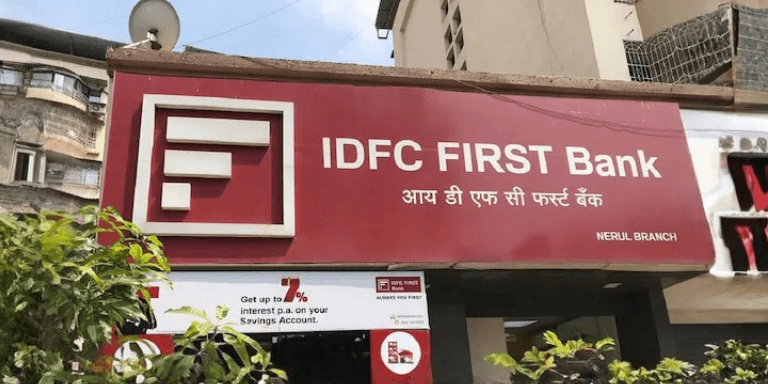
IDFC First Bank was formed by the merger of IDFC Bank and Capital First, combining infrastructure finance with retail lending expertise.
In simple language:
-
IDFC brought long-term project and institutional strength
-
Capital First brought consumer loans and retail banking
-
The merged bank aims to be a retail-focused, low-cost, digital-friendly bank
For EMI-focused users, this matters because:
-
Retail banks drive personal loan, home loan, and credit card interest rates
-
Strong retail growth usually means better loan products and competitive EMIs
IDFC First Bank share price today: what investors are really looking at
When people search “IDFC First Bank share price today”, they are rarely just checking numbers. They want answers to deeper questions:
-
Is the bank financially stable?
-
Is growth improving or slowing?
-
Why is the share price volatile?
-
Is this a long-term wealth creator or a short-term trade?
Instead of focusing on daily price movements, experienced investors look at trends, not ticks.
How IDFC First Bank share price has behaved over time
1. Early optimism after merger
After the merger, expectations were high:
-
Rapid retail expansion
-
Improvement in asset quality
-
Strong CASA (low-cost deposits)
This optimism initially supported the IDFC First Bank share price.
2. Reality check phase
Over time, investors became cautious due to:
-
High operating costs
-
Lower profitability compared to peers
-
Slow improvement in return ratios
This led to sideways movement and corrections, frustrating short-term investors.
3. Current phase: consolidation and patience
At present, the market is watching:
-
Consistent profit growth
-
Reduction in NPAs
-
Improvement in ROA and ROE
The share price reflects expectations, not just performance.
Why IDFC First Bank share is falling (or not rising fast)
One of the most searched questions is “why IDFC First Bank share is falling”. The answer is rarely a single reason.
Key factors behind pressure on the share price
1. Profitability takes time in banking
Retail banking growth is capital-intensive. While loans grow fast, profits lag because:
-
Deposit acquisition costs are high
-
Technology and branch expansion require spending
Markets often punish delayed profitability, even if the business is improving.
2. Comparison with faster-growing peers
Banks like AU Small Finance Bank show:
-
Higher return ratios
-
Faster earnings visibility
As a result, investors sometimes shift money away from IDFC First Bank, affecting the IDFC bank share price.
3. Market sentiment and macro factors
Interest rate cycles, RBI policies, and liquidity conditions affect all banking stocks. When sentiment turns cautious:
-
Mid-tier banks fall faster
-
Large banks absorb shocks better
IDFC First Bank news: what actually matters (and what doesn’t)
Not all IDFC First Bank news impacts long-term investors.
News that matters:
-
Sustained deposit growth
-
Improvement in asset quality
-
Stable net interest margins
-
Consistent quarterly profits
News that doesn’t:
-
Short-term price volatility
-
Social media speculation
-
One-off rumors without regulatory confirmation
Addressing concerns about IDFC bank fraud news
Search terms like create anxiety, especially among EMI users.
Important clarification:
-
Large banks routinely report isolated fraud cases, as required by regulation
-
These do not automatically indicate systemic risk
-
What matters is how quickly losses are recognized and resolved
So far, there is no evidence of a bank-wide credibility issue that threatens depositors or borrowers.
IDFC Bank share vs AU Small Finance Bank share: a realistic comparison
Many users compare IDFC share price with AU Small Finance Bank share.
Key differences explained simply
| Factor | IDFC First Bank | AU Small Finance Bank |
|---|---|---|
| Bank type | Universal bank | Small finance bank |
| Customer base | Urban + retail | Retail + MSME |
| Growth style | Gradual, scale-focused | Faster, niche-focused |
| Risk profile | Moderate | Slightly higher |
| Investor appeal | Long-term turnaround | Growth-oriented |
There is no “better” bank universally—only what suits your risk tolerance.
Should you buy IDFC First Bank share now?
Buying may make sense if:
-
You believe in long-term retail banking growth
-
You are patient with multi-year timelines
-
You are comfortable with moderate volatility
Buying may NOT suit you if:
-
You expect quick returns
-
You prefer dividend-heavy stocks
-
You are uncomfortable with consolidation phases
Should you hold IDFC First Bank share?
Holding makes sense if:
-
You already own the stock at reasonable levels
-
The bank continues improving fundamentals
-
There is no deterioration in asset quality
Selling only due to temporary price stagnation often leads to regret.
How EMI-focused users should think about bank stocks
If you use EMI calculators regularly, bank health affects you in real ways:
-
Loan interest rates
-
Credit availability
-
Refinancing options
-
Prepayment terms
This is why many users quietly track banks while planning EMIs.
A neutral financial planning platform like Emi calculator vip helps users:
-
Compare loan affordability clearly
-
Understand interest impact before committing
-
Make decisions independent of market noise
It complements not replaces investment research.
Why professional financial guidance still matters
While articles provide clarity, professional advice helps with:
-
Risk assessment
-
Asset allocation
-
Tax planning
-
Portfolio balance between equity and debt
Especially when banking stocks are involved, context matters more than headlines.
Final verdict: Buy, Hold, or Wait?
There is no universal answer.
-
Long-term investors: Watch fundamentals, not daily price
-
EMI planners: Focus on loan affordability first, stocks second
-
Short-term traders: Volatility may not suit cautious profiles
IDFC First Bank is a work-in-progress story, not a quick win.
FAQs – Clear answers designed for Google AI Overviews
What is IDFC First Bank share price today?
The share price changes daily based on market demand, earnings expectations, and broader banking sentiment. Investors should track trends rather than intraday numbers.
Why is IDFC First Bank share underperforming?
Primarily due to delayed profitability, higher costs, and investor preference for faster-earning banks.
Is IDFC First Bank a safe bank?
Yes. It is regulated by RBI and follows standard banking norms. Isolated issues do not indicate systemic risk.
Is IDFC First Bank good for long-term investment?
It may suit investors who believe in retail banking growth and can wait patiently for returns.
How does IDFC Bank differ from AU Small Finance Bank?
IDFC is a universal bank with broader operations, while AU focuses on niche, faster-growing retail segments.
Does bank share price affect loan EMIs?
Indirectly, yes. Strong banks offer more competitive loan products over time.
Should EMI planners invest in bank shares?
Only if investment goals are separate from loan obligations. EMI affordability should always come first.
How can EMI calculators help in financial planning?
They provide clarity on loan costs, interest impact, and repayment ability—helping users avoid over-leveraging.
Subscribe to our newsletter
Get the latest financial tips and calculator updates delivered straight to your inbox.